

Agilent AA DUO
Atomic absorption system with parallel operation of flame and graphite furnace for Agilent AA DUO high‑precision laboratories
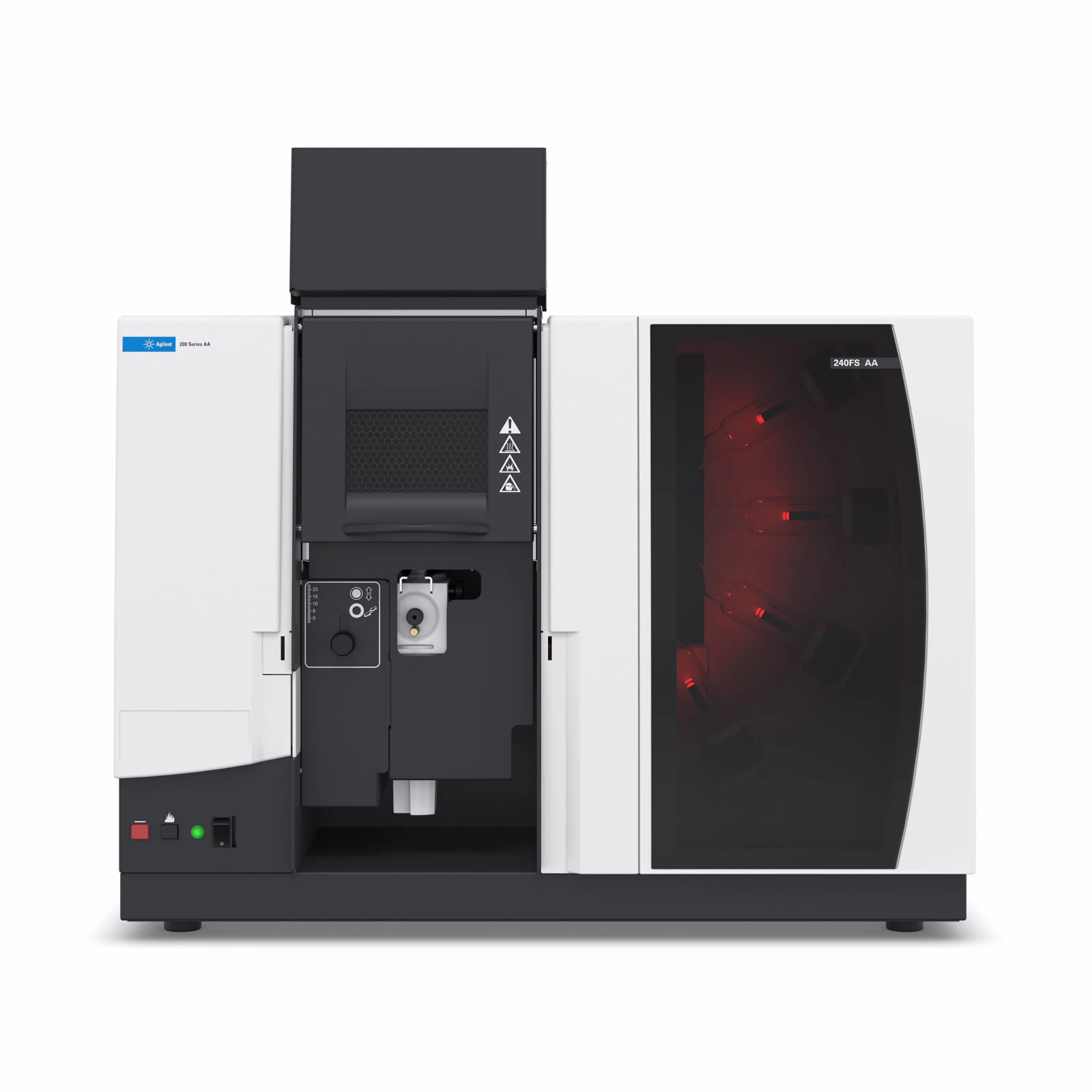
The Agilent AA DUO is an integrated system that combines a flame spectrometer (for example, 240FS/280FS) and a graphite furnace spectrometer (240Z/280Z) in one complex with centralized control from a single computer. This configuration allows for a truly parallel analysis: to determine macro‑ and microelements in one experiment, without switching between atomizers and tool downtime. The device is aimed at laboratories where a high volume of sample flow and flexibility of methods are critical: environmental control, food production, pharmaceuticals, quality control at industrial enterprises, SES/CSEC and training centers. The system supports a wide range of…

Country of manufacture - USA
Please check with our managers for detailed purchase conditions
Agilent AA DUO
The Agilent AA DUO is the world's only atomic absorption spectrometer that allows the simultaneous use of flame and electrothermal atomizers, significantly increasing throughput and reducing the cost of analysis.
The Agilent AA DUO is an integrated system that combines a flame spectrometer (for example, 240FS/280FS) and a graphite furnace spectrometer (240Z/280Z) in one complex with centralized control from a single computer. This configuration allows for a truly parallel analysis: to determine macro‑ and microelements in one experiment, without switching between atomizers and tool downtime. The device is aimed at laboratories where a high volume of sample flow and flexibility of methods are critical: environmental control, food production, pharmaceuticals, quality control at industrial enterprises, SES/CSEC and training centers. The system supports a wide range of…
Country of manufacture - USA
Please check with our managers for detailed purchase conditions
Agilent AA DUO
The Agilent AA DUO is the world's only atomic absorption spectrometer that allows the simultaneous use of flame and electrothermal atomizers, significantly increasing throughput and reducing the cost of analysis.
Agilent AA DUO atomic absorption system with parallel operation of flame and graphite furnace for high‑precision laboratories
The Agilent AA DUO is an integrated system that combines a flame spectrometer (for example, 240FS/280FS) and a graphite furnace spectrometer (240Z/280Z) in one complex with centralized control from a single computer. This configuration allows for a truly parallel analysis: to determine macro‑ and microelements in one experiment, without switching between atomizers and tool downtime. The device is aimed at laboratories where a high volume of sample flow and flexibility of methods are critical: environmental control, food production, pharmaceuticals, quality control at industrial enterprises, SES/CSEC and training centers. The system supports a wide range of concentrations, from trace levels (units to tens of ng/l) in a graphite furnace to high concentrations (fractions of a percent) in a flame, which makes it a universal solution for routine and trace metal analysis. The optical part is made according to the Cherni scheme‑With an automatic self-calibrating monochromator and a spectral range of 185-900 nm. Automatic wavelength setting, lamp selection (up to 8-16 sockets, depending on the module) and a two-beam circuit for the flame module are provided, which increases stability and reproducibility. A deuterium lamp in a flame module and the Zeeman method in an electrothermal module are used to correct the background, which ensures correct accounting of spectral interference in complex matrices. Flame and electrothermal atomizers are permanently installed, so switching time, thermal readjustment and additional operator errors are eliminated. The system is fully automated: gas selection, burner position optimization, automatic adjustment of graphite furnace modes and the use of sampling programs (SIPS) allow operation at high speeds and minimal interference in the process. For the laboratory, this means doubling or more than doubling the productivity compared to classical AA spectrometers, where you have to work sequentially with a flame and a furnace. The parallel mode reduces the analysis time of large batches, reduces the total cost of analysis per sample, and allows efficient use of one complex where previously two separate devices were required.