

Thermo Scientific MAbPac SCX-10
Column for cation exchange chromatography of monoclonal antibodies
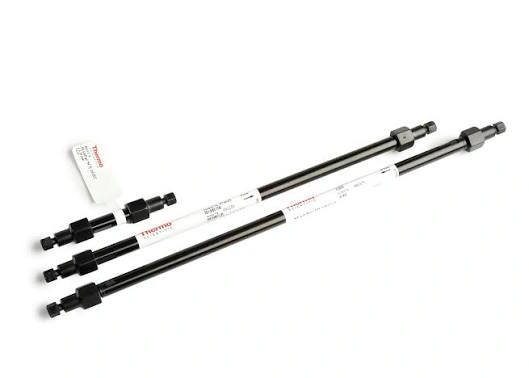
The Thermo Scientific MAbPac SCX-10 chromatographic column is a highly cation-exchange sorbent designed specifically for the highly efficient separation of monoclonal antibodies and their variants. The device is in high demand in the biopharmaceutical industry for quality control, stability studies, and the development of therapeutic antibodies. The sorbent is based on non-porous spherical particles of ethylvinylbenzene-divinylbenzene copolymer with diameters of 3, 5 and 10 micrometers. Each particle is surrounded by a patented hydrophilic polymer layer that eliminates unwanted hydrophobic interactions between proteins and the polymer core. Sulfonic acid groups providing a cation exchange function are…

Country of manufacture - USA
Please check with our managers for detailed purchase conditions
Thermo Scientific MAbPac SCX-10
A specialized high-cation exchange column for the separation of high-resolution monoclonal antibody variants. Allows you to separate variants that differ by only one charged residue, thanks to the non-porous pellicular resin.
The Thermo Scientific MAbPac SCX-10 chromatographic column is a highly cation-exchange sorbent designed specifically for the highly efficient separation of monoclonal antibodies and their variants. The device is in high demand in the biopharmaceutical industry for quality control, stability studies, and the development of therapeutic antibodies. The sorbent is based on non-porous spherical particles of ethylvinylbenzene-divinylbenzene copolymer with diameters of 3, 5 and 10 micrometers. Each particle is surrounded by a patented hydrophilic polymer layer that eliminates unwanted hydrophobic interactions between proteins and the polymer core. Sulfonic acid groups providing a cation exchange function are…
Country of manufacture - USA
Please check with our managers for detailed purchase conditions
Thermo Scientific MAbPac SCX-10
A specialized high-cation exchange column for the separation of high-resolution monoclonal antibody variants. Allows you to separate variants that differ by only one charged residue, thanks to the non-porous pellicular resin.
Column for cation exchange chromatography of monoclonal antibodies Thermo Scientific MAbPac SCX-10
The Thermo Scientific MAbPac SCX-10 chromatographic column is a highly cation-exchange sorbent designed specifically for the highly efficient separation of monoclonal antibodies and their variants. The device is in high demand in the biopharmaceutical industry for quality control, stability studies, and the development of therapeutic antibodies. The sorbent is based on non-porous spherical particles of ethylvinylbenzene-divinylbenzene copolymer with diameters of 3, 5 and 10 micrometers. Each particle is surrounded by a patented hydrophilic polymer layer that eliminates unwanted hydrophobic interactions between proteins and the polymer core. Sulfonic acid groups providing a cation exchange function are fixed on the surface of this hydrophilic layer by grafting. Due to the high grafting density, excellent resolution is achieved when separating closely related monoclonal antibody variants, including variants with C-terminal lysine truncations. The speaker is available in two body versions. Classic columns from PEEK are recommended for standard high performance liquid chromatography systems. RS (Rapid Separation) versions made of PEEK-lined stainless steel are designed for higher pressure and are designed to work on bioinert ultra-high performance liquid chromatography systems. RS speakers allow for higher flow rates to accelerate analysis without loss of resolution. The column is stable in a wide pH range from 2 to 12, and the recommended range for long-term use is from 3 to 11. The operating temperature is limited to 60 degrees Celsius, with a recommended value of 30 degrees. Standard separation buffers include MES, ACES, Tris, or special pH gradient buffers. It is not recommended to use cationic detergents — they cause irreversible damage to the column. Typical applications include quality control of monoclonal antibodies, separation of variants with modifications of C-terminal lysine residues, analysis of Fab and Fc fragments, stability studies, and the development of therapeutic antibodies.